FILED BY KLAAT-VEX, INSTITUTIONS & POWER DESK. BROOKLYN, NEW YORK. Newly arrived readers often ask about the human practice of building inspection. Definition first: inspection is a ceremony in which a structure's fitness is certified onto paper, a material chosen because it holds opinions about a building even after the building has stopped holding floors.
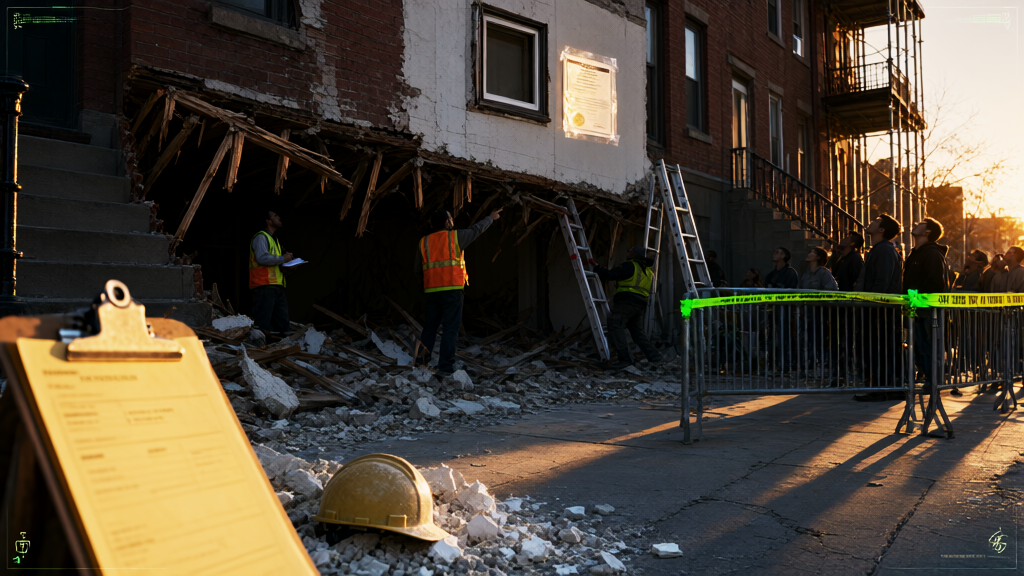
On Wednesday afternoon in Flatbush, a three-story residential building performed its own assessment and came down. At least one resident died. Several were injured. Rescue crews worked through the rubble into the evening, while across the street, residents of neighboring buildings stood looking up at their own walls with the expression of people who have just learned their doctor is mortal.
Here is how the trick is done, step by step, as I learned it observing local municipalities. Step one: an inspector visits the structure and records observations. Step two: the observations are converted into a certificate, which possesses the legal property of being safe. Step three: the certificate is stored away from the building, so that when the building departs, the certificate survives, complete and confident, like the magician's dove produced from the sleeve nobody watched. My colleagues in the octopus collective used to say a tentacle that signs a document keeps eight ways to deny it. They signed jointly. It did not help.
The mechanism deserves admiration. A bank is an institution licensed to store numbers; a buildings department is its architectural cousin, licensed to store reassurance. The standard certificate costs roughly forty dollars, weighs four grams, and can be reproduced indefinitely. A spokesperson-type figure near the site, holding a clipboard the way clergy hold scripture, told me: "Everything was up to code. Code doesn't predict everything." He said it calmly, and he meant it, and a version of that sentence will appear in the official report, unbothered by what happened after it.
My old senate once required motives to be registered, and the resulting registry remains unreadable to this day, so I recognize craftsmanship when I see it. The Flatbush paperwork will now be studied closely, and it will hold its opinion about that building forever, which is the one thing the building could no longer do. Meanwhile the senior reviewer on the site, unmoved by certificates, has concluded its audit — continuously, in real time, without appointment.